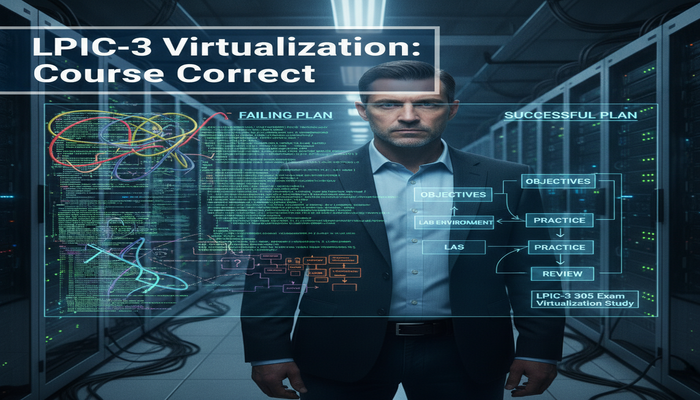
Are you gearing up for the LPIC-3 Virtualization and Containerization exam, officially known as the LPIC-3 305-300? This advanced certification from LPI is a significant milestone for any Linux professional looking to master the complexities of virtualization and containerization technologies. While the prospect of earning your LPIC-3 certification is exciting, many candidates find themselves facing unexpected hurdles, leading to frustration and, often, failure. This article delves into the common reasons why aspiring professionals' LPIC-3 virtualization exam plans often fall short and, more importantly, how you can avoid these pitfalls to secure your success.
The LPIC-3 305-300 exam, part of the Linux Professional Institute's highest level of multi-certification, tests your in-depth knowledge and skills in managing various virtualization solutions, including full virtualization, containerization, and VM deployment. It's not merely about knowing the commands; it's about understanding the underlying concepts, architectural designs, and best practices. If you've ever wondered why your study efforts aren't yielding the desired results, or if you're just starting your preparation, this comprehensive guide is for you. We’ll explore the critical mistakes candidates make and provide a roadmap to help you craft a robust, successful LPIC-3 virtualization exam strategy.
The Allure and The Reality of LPIC-3 Certification
The LPIC-3 certification is a badge of honor, signifying a top-tier expert in Linux administration with specialized skills. For those aiming for the LPI Virtualization and Containerization certification, it translates into a deep understanding of technologies that are pivotal in modern IT infrastructure, from cloud environments to DevOps pipelines. The LPIC-3 305 exam covers essential topics like Xen, QEMU, Libvirt, LXC, and Docker, alongside cloud-native deployment tools like Packer, cloud-init, and Vagrant. Achieving this certification can significantly boost your career prospects, opening doors to advanced roles and higher earning potential, as evidenced by the growing demand for skilled IT professionals highlighted by the Bureau of Labor Statistics.
However, the journey to becoming an LPIC-3 certified professional is far from trivial. The exam's comprehensive nature and the depth of knowledge required demand more than superficial study. Many candidates underestimate the rigor, leading to flawed preparation plans. Understanding the scope, the LPI LPIC-3 305 exam syllabus, and the specific LPI 305-300 exam objectives is the first step toward building a successful plan. Without a clear understanding of the LPIC-3 Virtualization and Containerization certification requirements, your efforts might be misdirected.
Common Pitfalls: Why Your LPIC-3 Virtualization Exam Plan Fails
Preparing for an advanced exam like the LPIC-3 305 requires discipline, strategic planning, and the right resources. Many candidates stumble not because they lack intelligence or dedication, but because their approach to preparation is flawed. Let's dissect the most common reasons why LPIC-3 virtualization exam plans often fail.
1. Underestimating the Depth of the Exam
The LPIC-3 is not an entry-level or intermediate certification. It's designed for senior-level Linux professionals. Many candidates approach the LPIC-3 305-300 with the same study habits they used for LPIC-1 or LPIC-2, which is a critical mistake. The LPIC-3 Virtualization and Containerization exam delves deep into the architectural nuances, configuration intricacies, and troubleshooting methodologies of virtualization and containerization technologies. Simply memorizing commands or concepts won't suffice. You need a profound understanding of why things work the way they do, the implications of various configurations, and how to diagnose complex issues.
Candidates often fail to grasp the specific nuances of each technology covered, such as the differences in resource management between Xen and QEMU, or the intricacies of network bridging with Libvirt. The exam expects practical, real-world knowledge, not just theoretical recall. Without hands-on experience and a conceptual understanding of each LPI LPIC-3 305 exam topic, your plan is built on shaky ground.
2. Lack of a Structured Study Guide
Without a proper LPIC-3 Virtualization and Containerization study guide, candidates often jump between topics haphazardly. This leads to gaps in knowledge and inefficient use of study time. A structured approach, preferably following the official LPI 305-300 exam objectives, is paramount. Each objective typically represents a skill or knowledge area that will be tested. Ignoring these objectives or studying them out of order can leave you ill-prepared for certain sections of the exam.
Many focus on areas they find interesting or already know well, neglecting the more challenging or less familiar LPIC-3 305 exam curriculum V3.0 topics. This imbalance is a recipe for failure. A good study plan allocates time proportional to the topic weighting in the syllabus, ensuring comprehensive coverage.
3. Insufficient Hands-On Experience
The LPIC-3 virtualization exam is not just theoretical. It assesses your ability to implement and manage these technologies in a practical setting. Reading a book about Docker is one thing; actually building, deploying, and managing Docker containers is another. Without significant hands-on experience, you'll struggle with scenario-based questions and performance-related tasks implicitly tested by the exam. Setting up a lab environment is not optional; it's mandatory. This includes working with Xen hypervisors, deploying QEMU/KVM virtual machines, managing them with Libvirt, experimenting with LXC, and orchestrating Docker containers.
Practical application reinforces theoretical knowledge and helps you internalize complex concepts. Many candidates delay or skip the hands-on practice, assuming they can pick it up “later” or relying solely on theoretical study materials. This is a critical error for a practical, performance-focused certification like the LPIC-3 305.
4. Relying on Outdated or Incomplete Resources
The world of virtualization and containerization evolves rapidly. Relying on outdated books or online tutorials can lead to learning obsolete practices or missing crucial updates that are part of the LPIC-3 305 exam curriculum V3.0. Always verify your study materials against the official LPI documentation and the current exam version (V3.0 in this case). While there might not be a single “best books for LPIC-3 virtualization exam” for every topic, combining the latest official documentation, reputable online courses, and practical guides is essential.
Furthermore, some resources might provide only a superficial overview, failing to cover the depth required for the LPI Virtualization and Containerization certification. It's important to cross-reference information and ensure your study sources are comprehensive and current. For a detailed breakdown of the syllabus, refer to the official LPI LPIC-3 305 exam syllabus.
5. Neglecting Practice Questions and Mock Exams
Failing to incorporate LPIC-3 305 practice questions and full-length mock exams into your study plan is another common mistake. Practice questions help you: assess your understanding of specific topics, identify weak areas, become familiar with the LPIC-3 Virtualization and Containerization exam format, and manage your time effectively under exam conditions. Many candidates study diligently but skip this crucial step, entering the exam room without knowing what to expect or how to pace themselves.
Mock exams, especially, are invaluable for simulating the actual exam experience, including the 90 minutes duration and 60 questions. They can help you understand the LPIC-3 305 exam passing score of 500/800 and identify if you're consistently hitting that target. Don't just answer questions; analyze why an answer is correct or incorrect to deepen your understanding.
6. Poor Time Management and Procrastination
The LPIC-3 305-300 exam covers a significant amount of material. Effective time management is critical. Many candidates underestimate the time required for comprehensive study, hands-on practice, and review, leading to cramming sessions closer to the exam date. This superficial learning rarely sticks and often results in panic during the exam.
A realistic study schedule that breaks down the LPI LPIC-3 305 exam topics into manageable chunks, with dedicated time for each, is essential. Avoid procrastination and commit to your schedule. Remember, consistent, focused study over several weeks or months is far more effective than intense, last-minute cramming for a certification of this caliber.
Understanding the LPIC-3 305-300 Exam Details
Before diving into a foolproof plan, let's recap the essential LPIC-3 Virtualization and Containerization exam details:
- Exam Name: LPIC-3 Virtualization and Containerization
- Exam Code: 305-300
- Exam Price: $200 (USD)
- Duration: 90 mins
- Number of Questions: 60
- Passing Score: 500 / 800
These details highlight the need for efficiency and accuracy. With 60 questions in 90 minutes, you have approximately 1.5 minutes per question. This underscores the importance of not just knowing the material but being able to recall it quickly and apply it under pressure. Thorough familiarity with LPI 305-300 sample questions can help refine your speed and accuracy.
Navigating the LPIC-3 305-300 Syllabus: A Deep Dive
A critical step in avoiding failure is to deeply understand the LPI LPIC-3 305 exam syllabus. Each topic area has a specific weight, indicating its importance on the exam. Your study plan should reflect these weightings.
Full Virtualization (22%)
This section lays the groundwork for understanding how virtualization works at a fundamental level and then dives into specific hypervisors and management tools.
- Virtualization Concepts and Theory - 6%: This covers the basic principles of virtualization, types of virtualization (full, paravirtualization, hardware-assisted), hypervisor types (Type 1 and Type 2), and key components like virtual machines, guest OS, host OS, and virtual hardware. Understanding this theoretical foundation is crucial before tackling specific implementations.
- Xen - 3%: Focuses on the Xen hypervisor, including its architecture, domains (Dom0, DomU), network and storage configuration for Xen virtual machines, and management tools. While its weighting is lower, Xen remains a significant enterprise virtualization platform.
- QEMU - 4%: This topic covers QEMU as a standalone emulator and its integration with KVM (Kernel-based Virtual Machine). You'll need to know how to create and manage virtual machines using QEMU/KVM, configure virtual hardware, and understand its performance aspects.
- Libvirt Virtual Machine Management - 9%: Libvirt is a powerful virtualization management library and daemon that supports multiple hypervisors (KVM, QEMU, Xen, LXC). This is a high-weight topic. You'll need to master its command-line tools (virsh), configuration files (XML domains), network management (virsh net), storage pool management (virsh pool), and snapshotting capabilities. This is central to managing virtual machines on Linux.
- Virtual Machine Disk Image Management - 3%: This covers various virtual disk formats (qcow2, raw, vmdk), their creation, conversion, resizing, and optimization. Efficient disk management is vital for performance and storage utilization in virtualized environments.
Container Virtualization (25%)
The modern IT landscape heavily relies on containers. This section covers their concepts, leading technologies, and orchestration.
- Container Virtualization Concepts - 7%: Similar to full virtualization concepts, this introduces the fundamentals of containers: namespaces, cgroups, union file systems, container images vs. virtual machine images, and the benefits of containerization. Understanding the isolation and resource management mechanisms is key here.
- LXC - 6%: Linux Containers (LXC) is an operating-system-level virtualization method for running multiple isolated Linux systems (containers) on a single control host. You'll need to know how to create, manage, and configure LXC containers, including networking and storage for them.
- Docker - 9%: This is another high-weight topic, reflecting Docker's industry prevalence. Expect questions on Docker daemon, images (building with Dockerfiles), containers (running, stopping, managing), volumes, networks, Docker Compose for multi-container applications, and basic security considerations. Mastery of Docker is essential for the containerization certification LPI professional title.
- Container Orchestration Platforms - 3%: While Docker Swarm and Kubernetes are major players here, this section might touch upon fundamental concepts of orchestration: service discovery, load balancing, scaling, and deployment strategies. Given the low weight, a high-level understanding of how these platforms manage containers is likely sufficient, rather than deep configuration details of a specific orchestrator.
VM Deployment and Provisioning (10%)
This section focuses on automating the deployment and management of virtual environments, crucial for cloud and DevOps workflows.
- Cloud Management Tools - 2%: This might broadly cover concepts related to Infrastructure as Code (IaC) and how tools interact with cloud APIs to provision resources. Specific tool knowledge might be minimal given the low weighting, focusing more on principles.
- Packer - 2%: Packer by HashiCorp is a tool for creating identical machine images for multiple platforms from a single source configuration. You'll need to understand how to use Packer to build images for various virtualization platforms (e.g., QEMU, cloud providers) and its configuration syntax.
- cloud-init - 3%: cloud-init is the industry standard for cross-platform cloud instance initialization. It's used to customize cloud instances on first boot. You'll need to understand how to use cloud-init to configure networking, users, run scripts, and install packages when a VM first starts.
- Vagrant - 3%: Vagrant by HashiCorp is a tool for building and managing virtual machine environments in a single workflow. It's often used by developers to create reproducible development environments. Understanding Vagrantfiles, provisioners, and box management is key.
As you can see, the LPI Virtualization and Containerization certification delves into a broad yet specialized set of skills. Each area demands focused attention. For more information on complementary certifications that enhance your Linux expertise, explore our article on unleashing the power of LPIC-3 Security.
Crafting a Winning LPIC-3 Virtualization Exam Strategy
Now that you understand the common pitfalls and the exam's structure, let's outline a strategy to ensure your LPIC-3 virtualization exam plan doesn't fail.
1. Master the Official LPI 305-300 Exam Objectives
This is your primary blueprint. Go through each objective on the official LPI website. Don't just read them; understand what each objective implies. For instance, if an objective states “Configure Xen network interfaces,” ensure you can practically perform this task and understand the various networking modes. Use the official objectives to create a checklist for your study plan.
2. Invest in Quality Study Materials and Resources
While there isn't one definitive book for the LPIC-3 305-300, a combination of resources is effective. This includes official LPI documentation, vendor-specific manuals (for Xen, QEMU, Docker), reputable online courses (e.g., from Linux Academy, A Cloud Guru, Pluralsight), and specialized books on virtualization and containerization. Prioritize resources that are up-to-date with V3.0 of the exam curriculum. Look for LPIC-3 Virtualization and Containerization study guide materials that offer both theoretical explanations and practical examples.
3. Build a Dedicated Home Lab
This cannot be stressed enough. A home lab where you can practice every single concept covered in the syllabus is invaluable. You'll need a Linux machine (physical or a powerful VM) capable of running nested virtualization if you want to experiment with KVM/QEMU, Xen, LXC, and Docker. Dedicate significant time to hands-on exercises: install hypervisors, create VMs, configure networks, build Docker images, deploy containers, and use provisioning tools like Vagrant and Packer. This practical experience is the cornerstone of passing the LPIC-3 virtualization exam.
4. Develop a Structured Study Schedule
Break down the LPI LPIC-3 305 exam topics according to their weighting and your current knowledge level. Allocate more time to high-weight areas and topics you find challenging. A sample schedule might look like:
- Week 1-3: Full Virtualization Concepts, Xen, QEMU. Focus on understanding and lab exercises.
- Week 4-6: Libvirt Virtual Machine Management, VM Disk Image Management. Deep dive into virsh commands and XML.
- Week 7-9: Container Virtualization Concepts, LXC, Docker. Hands-on Dockerfiles, networks, volumes.
- Week 10-11: Container Orchestration Platforms (concepts), Packer, cloud-init, Vagrant. Automation focus.
- Week 12: Comprehensive Review, LPIC-3 305 practice questions, mock exams.
Adjust this based on your learning pace and prior experience. Consistency is key for the LPIC-3 305 exam duration. Regular, shorter study sessions are often more effective than infrequent, long ones.
5. Practice with LPIC-3 305 Practice Questions and Mock Exams
Once you've covered the material, shift your focus to practice questions. Look for high-quality LPI 305-300 sample questions that mirror the difficulty and format of the actual exam. Take full-length mock exams under timed conditions to simulate the LPIC-3 305 exam duration and pressure. Analyze your results meticulously: understand why you got questions wrong, revisit those topics, and re-test. This iterative process helps solidify your knowledge and improve your exam-taking strategy. Aim to consistently score above the LPIC-3 305 exam passing score of 500/800 in your practice tests before scheduling your exam.
6. Understand the LPIC-3 305 Exam Format
Knowing the LPIC-3 Virtualization and Containerization exam format (multiple-choice, fill-in-the-blank, etc.) and question types can help you prepare mentally. While specific examples aren't always released, general knowledge of LPI exam styles will aid you. Practice managing your time, reading questions carefully, and eliminating incorrect answers strategically. Don't let the pressure of the LPI LPIC-3 305 exam duration intimidate you; proper practice will build confidence.
Beyond the Exam: The Value of LPIC-3 Virtualization and Containerization
Successfully passing the LPIC-3 305-300 exam is more than just earning a certificate; it's about validating a highly sought-after skill set. With businesses rapidly adopting cloud-native architectures and microservices, the demand for professionals proficient in Linux virtualization and containerization has skyrocketed. The LPI Virtualization and Containerization certification directly addresses this industry need, proving your capability to design, implement, and manage these critical technologies.
Holding this certification positions you as an expert capable of handling complex infrastructure challenges, optimizing resource utilization, and driving innovation within organizations. It signifies your readiness for roles such as Senior Linux Administrator, DevOps Engineer, Cloud Engineer, or Solutions Architect. The LPI LPIC-3 305 exam topics are directly relevant to the tasks performed in these high-impact positions, making the certification a tangible asset for career advancement.
Moreover, the process of studying for the LPIC-3 virtualization exam itself deepens your understanding of Linux systems and modern infrastructure practices, making you a more versatile and valuable professional. It's an investment in your continuous professional development, ensuring you stay at the forefront of technological advancements in the Linux ecosystem. The comprehensive knowledge gained from understanding the LPIC-3 305 exam curriculum V3.0 equips you with tools to tackle real-world problems efficiently.
Conclusion
Your LPIC-3 virtualization exam plan doesn't have to fail. By understanding the common pitfalls – underestimating exam depth, lacking a structured study guide, insufficient hands-on experience, using outdated resources, neglecting practice questions, and poor time management – you can build a robust strategy for success. The LPI Virtualization and Containerization certification is challenging, but incredibly rewarding.
Focus on mastering the official LPI 305-300 exam objectives, leveraging quality study materials, dedicating time to a hands-on lab, and diligently practicing with LPIC-3 305 practice questions. With a well-structured approach and consistent effort, you'll not only pass the LPIC-3 305-300 exam but also emerge as a highly skilled and confident Linux professional ready to tackle the demands of modern IT infrastructure. Your journey to advanced Linux expertise starts with a solid plan, and with the insights shared here, you are well-equipped to achieve your LPIC-3 certification goals. For more insights into specialized Linux certifications, don't miss our article on how a training institute in Bahrain supports LPI certifications.
Ready to validate your expert-level skills? Visit Pearson VUE to schedule your LPIC-3 305-300 exam today and take the next leap in your Linux career!
Frequently Asked Questions About the LPIC-3 Virtualization Exam
1. What is the LPIC-3 Virtualization and Containerization certification?
The LPIC-3 Virtualization and Containerization (Exam 305-300) is one of the three specialty exams required to achieve the highest level of LPI certification, LPIC-3. It validates advanced skills in managing full virtualization technologies (like Xen, KVM/QEMU, Libvirt) and containerization solutions (like LXC, Docker), as well as VM deployment and provisioning tools (Packer, cloud-init, Vagrant).
2. How difficult is the LPIC-3 305-300 exam compared to LPIC-1 or LPIC-2?
The LPIC-3 305-300 exam is significantly more difficult than LPIC-1 or LPIC-2. It requires not just a broad understanding but deep, practical expertise in complex virtualization and containerization technologies. Candidates need extensive hands-on experience and a strong grasp of architectural concepts, troubleshooting, and best practices, going well beyond the foundational and intermediate levels.
3. What are the prerequisites for taking the LPIC-3 Virtualization exam?
To be LPIC-3 certified, you must hold an active LPIC-2 certification. While it's technically possible to take the LPIC-3 305-300 exam without having LPIC-2, you won't be granted the LPIC-3 certification until you also pass the LPIC-2 exams. It is strongly recommended to have a solid background in LPIC-1 and LPIC-2 topics before attempting LPIC-3.
4. What is the best way to prepare for the LPIC-3 305-300 exam?
The best preparation involves a multi-faceted approach: thoroughly studying the official LPI 305-300 exam objectives, building a dedicated home lab for extensive hands-on practice, using up-to-date and comprehensive study materials, taking LPIC-3 305 practice questions, and conducting full-length mock exams under timed conditions. Consistent study over several months is more effective than cramming.
5. How much does the LPIC-3 305-300 exam cost and what is its passing score?
The LPIC-3 305-300 exam costs $200 (USD). The passing score for the exam is 500 out of a maximum of 800. It consists of 60 questions and has a duration of 90 minutes. Adequate preparation, including timed practice tests, is crucial to meet this passing score within the allocated time.

 Posts
Posts


0 comments:
Post a Comment